Apprenticeship Standard & Occupational Profile
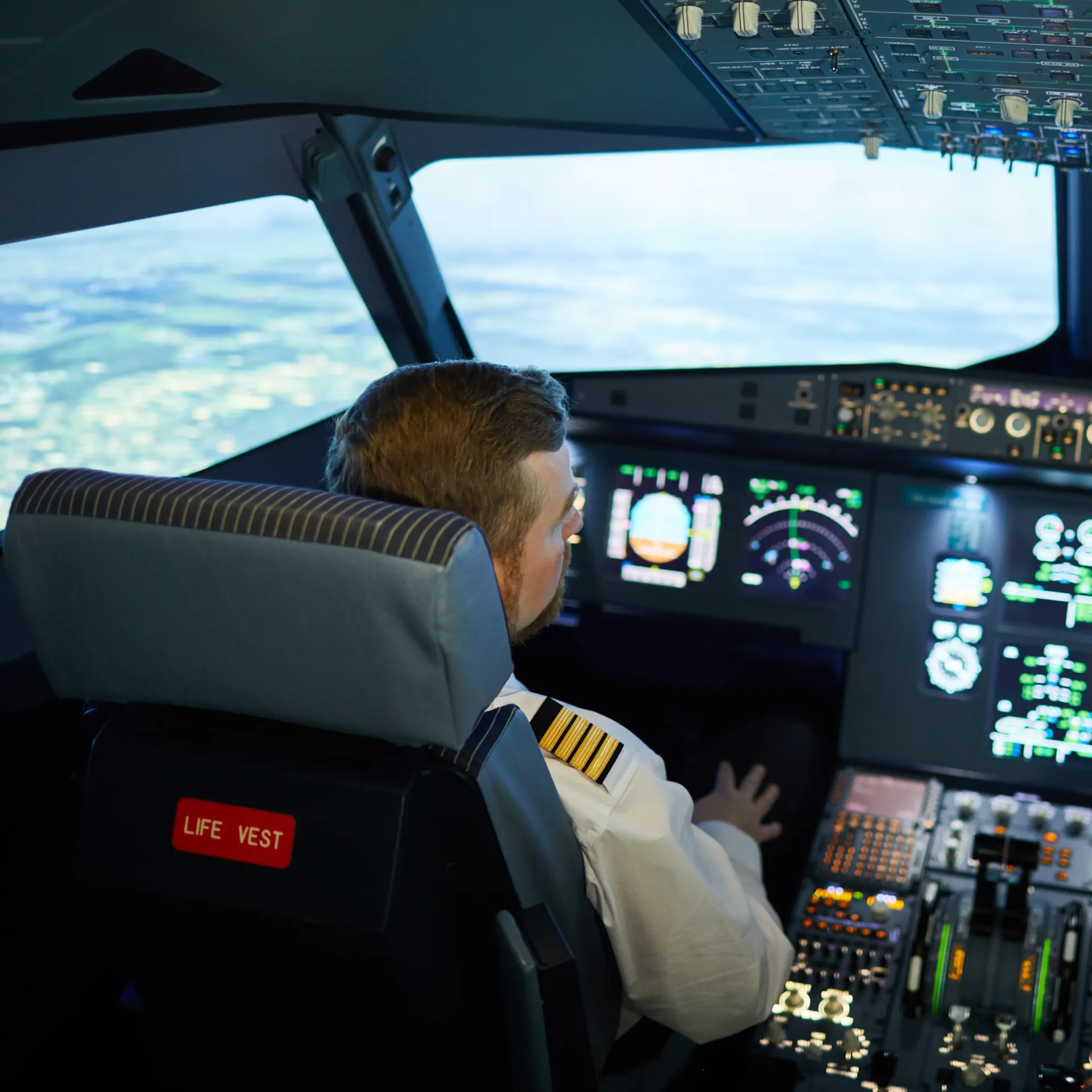
The first officer, also known as co-pilot, works in a variety of aircraft e.g. commercial, military, passenger or freight. The role of the first officer is to support the aircraft Commander and to assist her/him in the safe and efficient conduct of the flight.
In the event of the incapacitation of the Commander, the First Officer will assume the authority and responsibility for the aircraft and its crew, passengers and load.
During normal operations, the Commander and the First Officer will alternate in performing the roles of ‘pilot handling’ and ‘pilot monitoring’. In these situations, the ‘pilot monitoring’ will conduct radio communications and monitor the duties of the ‘pilot handling’. At all times they are to ensure the safety and security of the passengers and crew.
Apprentices will need to achieve either a frozen Air Transport Pilot Licence (Aeroplane) or a Multi-Crew Pilot Licence followed by Aircraft Type Conversion Training and supervised Line Training prior to taking an end-point assessment.
First officers are responsible to their employers for ensuring the safety and efficiency of every flight by
- Being fully aware of the planned route, contents of briefing sheets, the forecast meteorological conditions and runway states at the destination and alternate aerodromes
- Supporting the Commander in the maintenance of high standards of crew discipline and conduct
- Monitoring all aspects of the flight, checking that correct procedures and techniques are used, cross-checking all flight instrument indications, especially attitude, altitude / height, speed and heading and volunteering advice, information and assistance to the Commander, to contribute favourably to the safe and efficient conduct of the flight
- Complying with UK ANO (Air Navigation Order) and the UK AIP (Aeronautical Information Publication)
- Complying with EASA (European Aviation Safety Agency) Ops regulations
- Complying with ICAO (International Civil Aviation Organisation) standards and recommended practices
- Confirming the aircraft is following its planned navigation route and maintaining a safe terrain clearance
- Complying with all flight time limitations, company occurrence reporting and rest requirements applicable to their activities
- Reporting to the Commander any incident or defect that could endanger the safe operation of the aircraft
- During any emergency or abnormal situation, carrying out the drills and procedures as laid down in the appropriate Company Manual
Entry Requirements
Employers will set their own entry requirements including the requirement for security clearance. A class 1 medical certificate will be required under EASA/CAA regulations. Apprentices must be at least 18 years old in order to apply for a multi-crew pilot licence and at least 21 years old in order to apply for an Air Transport Pilot Licence.
Standard Facts
QAN
610/3140/9
Product Code
L6EPAFOP
Level
6
Durataion of Apprenticeship
24 months (this does not include EPA)
EPA Components
Practical Observation
Professional discussion
Entry to Assessment
- Achieve level 2 English and Maths (if not already held or valid alternatives)
- Completed either a frozen Air Transport Pilot Licence (Aeroplane) or a Multi-Crew Pilot Licence
- Completed Aircraft Type Conversion Training
- Completed Supervised Line Training as per CAA regulations
- Completed a portfolio of evidence (as detailed in the assessment plan)
The EPA period should only start once the employer is satisfied that the apprentice is consistently working at or above the level set out in the occupational standard, that is to say they have achieved occupational competence. In making this decision, the employer may take advice from the apprentice’s training provider(s), but the decision must ultimately be made solely by the employer.
Apprentices must not be put forward for their End-point Assessment before they are ready.
Further information can be found at the Skills England webpage – https://skillsengland.education.gov.uk/apprenticeships/